Commercial roofing
Standing Water on a Flat Roof: Causes and the Tapered Insulation Fix
Why water ponds on commercial flat roofs, why it shortens roof life, and how a tapered insulation system re-slopes the roof to drain.
By Cougill RoofingPublished 2 min read
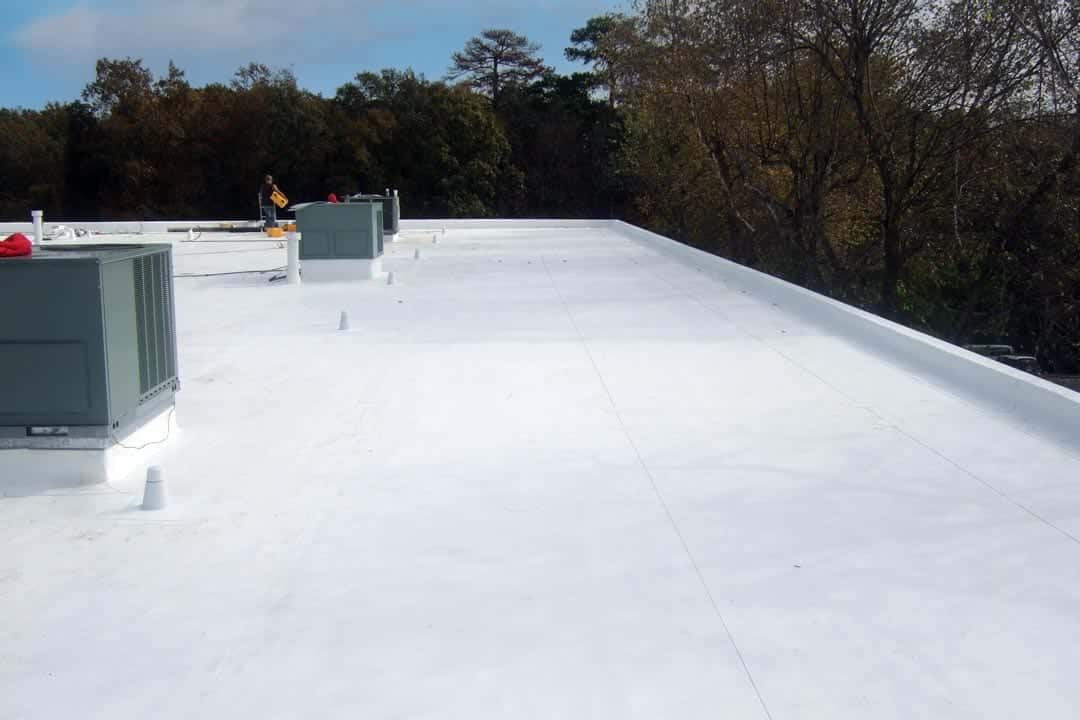
“Flat” roofs aren’t truly flat — or at least, they shouldn’t be. Every low-slope commercial roof needs enough pitch to move water to its drains, scuppers or gutters. When it doesn’t have it, water collects in low spots after every rain. That’s called ponding.
Why ponding water is a problem
- It accelerates membrane aging. Constant moisture and UV exposure at the waterline break down roofing membranes faster.
- It finds every weakness. Seams and penetrations sitting under water are under constant pressure.
- It adds weight. Large ponds add significant load to the structure.
- It can void warranties. Many manufacturers exclude damage from ponding water.
What causes it
- Insufficient design slope toward drains
- Structural deflection of the roof deck over time
- Drains set too high or in the wrong locations
- Compressed or wet insulation creating low spots
- Rooftop equipment and curbs that block water flow
How tapered insulation solves it
A tapered insulation system uses rigid insulation boards manufactured in varying thicknesses. Installed in a designed pattern, they create a continuous slope across the roof — plus “crickets” and “saddles” that steer water around obstacles and toward drains.
Benefits include:
- Positive drainage across the whole roof, not just parts of it.
- Added insulation value, which can improve energy performance.
- Longer membrane life, because the roof surface dries after rain.
When tapered insulation is installed
Tapered insulation is most cost-effective during a re-roof or new roof, when the existing membrane is coming off anyway. The process typically looks like this:
- Survey the roof. Measure the deck, mark drain and scupper locations and identify where water currently collects.
- Design the slope. Lay out a board pattern that creates continuous slope to every drain, with crickets behind curbs and between drains.
- Install the system. Place and fasten the tapered boards and cover board according to the roofing manufacturer’s requirements.
- Install the new membrane — PVC, modified bitumen, built-up or single-ply — over the newly sloped surface.
In some cases, adding drains or enlarging scuppers is part of the fix as well. A good design solves the drainage problem rather than moving the puddle somewhere else.
At Cougill Roofing, we design and install custom tapered insulation systems as part of new commercial roofs and re-roofs using PVC, modified bitumen, built-up and single-ply systems.
Don’t ignore ponding
Commercial roofs should be inspected at least twice a year and after severe weather. If you’re seeing standing water 48 hours after rain, it’s time for an evaluation. Contact us to schedule one, or learn more about our commercial and flat roofing services.